 info@tempuslaw.com.au
 0420 446 399

Dangerous Driving Lawyers

Strong Advocacy for Serious Dangerous Driving and Aggravated Charges.
A charge of dangerous driving under s 52A of the Crimes Act 1900 is an extremely serious matter, often involving impacts that cause grievous bodily harm or death. Whether the allegation involves driving under the influence, excessive speed, or a dangerous manner, the legal stakes involve significant custodial sentences and permanent criminal records. In such cases, the prosecution does not need to prove intent, only that the vehicle was driven dangerously at the time of the impact.
At Tempus Law, we specialise in identifying weaknesses in the prosecution's case, such as issues with causation or mechanical defects. We provide clear, straightforward advice tailored to your situation, ensuring you have a high level of support through every step of this complex legal process.
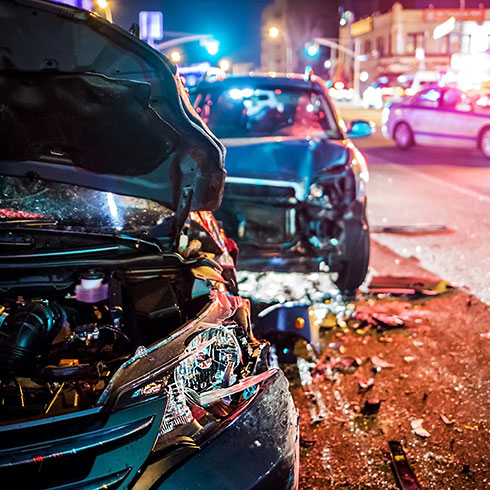
Dangerous driving
The offence of dangerous driving is found in s 52A of the Crimes Act 1900 (NSW).
A person is guilty of an offence under s 52A of the Act where it is found that they have been driving dangerously and have caused death or very serious injury to another person or persons. There are four separate offences under this section, as follows:
- Dangerous driving occasioning death
- Aggravated dangerous driving occasioning death
- Dangerous driving occasioning grievous bodily harm
- Aggravated dangerous driving occasioning grievous bodily harm
Onus and burden of proof
An offence under this provision is considered a strict liability offence. This means that the Prosecution do not have to prove that you held an intention to drive dangerously. Nor do they have to demonstrate that you intended to cause serious injury or death of another person.
It is for the Prosecution to establish, beyond reasonable doubt, that you:
- Drove a motor vehicle
- The vehicle was involved in an impact
- That caused death or grievous bodily harm to another person
- You were driving dangerously at the time
What does it mean “to drive”?
The term “to drive” is defined in s 4(1) of the Road Transport Act 2013 (NSW). It includes “being in control of the steering, movement or propulsion of a vehicle”. The ability to steer the vehicle is not essential to satisfy this offence. It is sufficient to establish that you had control over the propulsion, that is, that you had control of the mode of moving and stopping the vehicle.
Even if the motor vehicle was not being driven dangerously at the precise moment of impact, a preceding period of driving in a dangerous manner may be sufficient to demonstrate the nature of your driving behaviours.
What is considered and assessed by the Court?
Section 52A(5) of the Crimes Act, sets out circumstances in which a vehicle is said to have been “involved” in an impact occasioning death or grievous bodily harm, as follows:
- A vehicle overturning or leaving a road while the person is being conveyed in or on that vehicle (whether as a passenger or otherwise)
- An impact between any object and the vehicle while the person is being conveyed in or on that vehicle (whether as a passenger or otherwise)
- An impact between the person and the vehicle
- The impact of the vehicle with another vehicle or an object in, on or near which the person is at the time of the impact
- An impact with anything on, or attached to, the vehicle
- An impact with anything that is in motion through falling from the vehicle
- The person falling from the vehicle, or being thrown or ejected from the vehicle, while being conveyed in or on the vehicle (whether as a passenger or otherwise)
- An impact between an object (including the ground) and the person, as a consequence of the person (or any part of the person) being or protruding outside the vehicle, while the person is being conveyed in or on the vehicle (whether as a passenger or otherwise)
Causing death or grievous bodily harm
Death
There are generally no issues with proving death, although there might be a question of causation where the person does not perish immediately or soon after the accident.
Grievous bodily harm
“Grievous bodily harm” is “really serious bodily injury”: Swan v R [2016] NSWCCA 79 at [57]. The word “really” indicates “grievous bodily harm” is a more serious form of injury than actual bodily harm: Swan at [57]-[62].
Driving dangerously
Section 52A(1) and (3) of the Crimes Act set out different ways a person could be found guilty of dangerous driving:
Under the influence of alcohol or another drug
You may be charged with this offence if you are found to be “under the influence” alcohol or drugs after a serious road accident. The term “under the influence” is not specifically defined in the legislation, but it is clear that the term is not associated with a specific concentration of alcohol or another drug in a person’s body.
It is considered dangerous to drive a vehicle under the influence of drugs and/or alcohol. This is because when you are in such a state you won’t have the required concentration and physical control of the vehicle and, therefore, you have seriously disregarded other’s peoples safety by choosing to get behind the wheel.
At a speed dangerous
A person can also be driving dangerously if their speed is considered excessive.
This does not mean that if you are exceeding the speed limit you are automatically considered to be driving at a speed dangerous. What is essential in this assessment is the actual circumstances of the driving. What may be considered “safe” will vary on the conditions of the road, visibility, traffic conditions, pedestrian activity, and the mental and physical condition of the driver.
In a manner dangerous
This often captures a very wide range of driving behaviour. It captures anything connected with the management and control of your vehicle.
When assessing whether a person was driving in a manner dangerous, an objective test is applied based on the expected standard of care of other drivers and the potential danger other people have been put in by your actions while driving.
Driving in a manner dangerous can be due to negligence by you or due to a deliberate disregard for the Road Rules and the safety of others.
What are the circumstances of aggravation?
The term circumstances of aggravation is defined in s 52A(7) to include any circumstance at the time of impact occasioning death or grievous bodily harm in which –
- The prescribed concentration of alcohol, that being a reading of 0.15 or above, was present in your breath or blood
- You were driving the vehicle concerned on a road at a speed that exceeded, by more than 45 kilometres per hour, the speed limit (if any) applicable to the length of that road
- You were driving the vehicle to escape a pursuit by a police officer
- Your ability to drive was very substantially impaired by the fact that you were under the influence of a drug (other than intoxicating liquor) or a combination of drugs (whether or not intoxicating liquor was part of that combination)
Defences available
Section 52A(8) of the Act sets out the statutory defences, as follows:
- The fact that the person charged was under the influence of intoxicating liquor or of a drug or a combination of drugs
- To the speed at which the vehicle was driven
- To the manner in which the vehicle was driven
Causation
It can be a defence to a dangerous driving charge to show that there is no connection between a person’s dangerous driving and the death or serious injury of another person or people.
The defendant has the onus of proving that the harm occasioned was not in any way attributable to the manner of driving, speed and/or state of intoxication. Essentially, it must be demonstrated that the death or injury would have occurred regardless of the manner of their driving.
Mechanical defect
A mechanical defect in a vehicle could possibly provide a defence to dangerous driving where it causes a sudden, unexpected loss of control that the driver cannot reasonably rectify. However, if a person knew about this mechanical defect, or should have known about the defect, they may still be found guilty of dangerous driving. This is because choosing to drive when something is seriously wrong with your vehicle represents a great failure to consider the safety or other drivers and pedestrians.
What we offer
Strategic Criminal Defence Backed by Experience

Speeding related offences

Driving whilst suspended or disqualified

Dangerous driving

Negligent driving

Hoon offences

Reckless driving offences

Licence appeals and appeals against immediate licence suspensions.
Dangerous Driving Frequently Asked Questions
What is the legal difference between "Negligent" and "Dangerous" driving?
While negligent driving involves a failure to take proper care, dangerous driving (under section 52A of the Crimes Act 1900) is a significantly more serious criminal charge. It involves operating a motor vehicle in a manner that is considered "dangerous to the public," typically involving a death or a "really serious bodily injury" known as grievous bodily harm. Unlike standard traffic matters, dangerous driving is an indictable offence that carries the real possibility of a long-term gaol sentence.
What does "Strict Liability" mean in a dangerous driving case?
An offence under this provision is considered a strict liability offence. This means that the Prosecution does not have to prove that you intended to drive dangerously, nor do they have to demonstrate that you intended to cause serious injury or death. It is enough for the Prosecution to establish, beyond reasonable doubt, that you were in control of the vehicle, the vehicle was involved in an impact that caused death or grievous bodily harm, and you were driving dangerously at that time.
What constitutes "driving dangerously" according to the Court?
Section 52A of the Crimes Act identifies three primary ways a person can be found to be driving dangerously:
- Under the Influence: Driving while affected by alcohol or another drug to the extent that you lack the required concentration and physical control of the vehicle.
- At a Speed Dangerous: Driving at a speed that is excessive for the specific conditions, visibility, and pedestrian activity, regardless of the posted speed limit.
- In a Manner Dangerous: This captures a wide range of management and control behaviours that show a deliberate disregard for the road rules and the safety of others.
What are the "circumstances of aggravation"?
Aggravated dangerous driving charges carry much higher maximum penalties because they involve specific high-risk factors. These include:
- Having a prescribed concentration of alcohol (PCA) of 0.15 or above.
- Exceeding the speed limit by more than 45 kilometres per hour.
- Driving to escape a police pursuit.
- Having your ability to drive very substantially impaired by a drug or combination of drugs.
Will I go to gaol if I am convicted?
Dangerous driving occasioning death or grievous bodily harm is treated with extreme gravity. Due to the serious nature of the harm caused, there is a "guideline judgement" in NSW that suggests a full-time custodial sentence is usually appropriate unless the offender's moral culpability is very low. A conviction can result in imprisonment for up to 10 years for occasioning death, or 14 years if circumstances of aggravation are present.
What are the mandatory licence disqualifications?
If you are found guilty or plead guilty to dangerous driving, a significant period of licence disqualification is inevitable. Because it is a major offence, the Court will typically impose an automatic disqualification of several years. This is separate from any time spent in custody and is intended to protect the community from high-risk drivers.
Are there any valid defences to these charges?
Yes, section 52A(8) of the Act sets out specific statutory defences. You may be found not guilty if you can prove that the death or grievous bodily harm was not in any way attributable to:
- Your intoxication.
- The speed at which you were driving.
- The manner in which you were driving.
Essentially, you must demonstrate "causation"—that the injury or death would have occurred regardless of your driving behaviours.
Can a mechanical defect provide a defence?
A mechanical defect may provide a defence if it caused a sudden, unexpected loss of control that you could not reasonably rectify. However, if you were aware of the defect, or should have been aware of it, and chose to drive anyway, you may still be found guilty because that choice represents a failure to consider the safety of others.
Why do I need a specialist lawyer for a dangerous driving matter?
These cases are technically dense and often involve competing expert evidence regarding speed, impact, and toxicology. An experienced lawyer can scrutinise the Prosecution’s evidence to identify weaknesses, negotiate to have charges downgraded to negligent driving where appropriate, and present a sophisticated case in mitigation to reduce the length of any custodial sentence or disqualification.
DON'T RISK YOUR LICENCE OR YOUR
LIVELIHOOD.
We take a practical, results driven approach. Helping you understand your options,
preparing a compelling case, and representing you in court.
Contact us today for expert traffic law advice.

Contact us!
Fair Fees. Flexible Options.
Real Support.
Expert Legal Services Across All NSW Courts.
Get in touch today to discuss how we can help, on your terms.