 info@tempuslaw.com.au
 0420 446 399

Drink Driving + DUI Lawyers

Charged with a drink driving offence? Let our DUI lawyers help you take back control.
A drink driving or dwi charge can have serious consequences including licence suspensions, hefty fines, a criminal record, and even jail time. But with the right legal representation, one mistake doesn't have to define your future.
At Tempus Law, we understand what's at stake, and we work quickly to protect your licence, your livelihood, and your reputation.
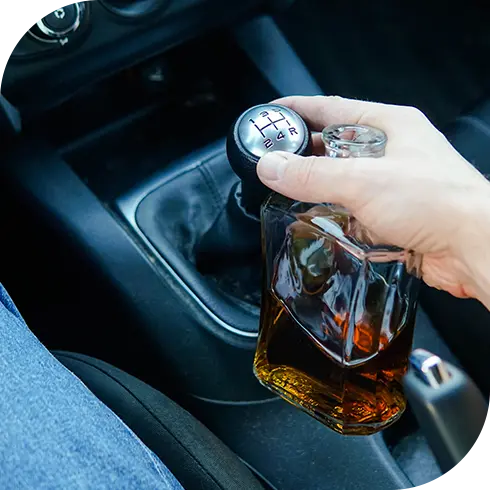
Drink driving
In NSW, “drink driving” refers to operating a motor vehicle while your blood alcohol concentration (BAC) exceeds the legal limit.
There are five different types of offences which you may be charged with, these include:
- Novice range – This is when a driver has a BAC over 0 but less than 0.019g. A novice range driver is a person who holds a learner or provisional licence.
- Special range – This is when a driver has a BAC between 0.02g and 0.049g. A special range driver is a person who holds a learner, provisional, bus drivers, and taxi drivers.
- Low range – This is when a driver has a BAC between 0.05g and 0.079g.
- Mid-range – This is when the driver has a BAC above 0.08 but less than 0.15.
- High-range – This is when a driver has a BAC of 0.15 or more.
The offence which you are charged with, and the penalty will vary, based on:
- The type of licence you may hold (i.e., whether it is an unrestricted, provisional, or learner licence)
- The BAC level identified
- Whether it’s a first offence or a repeat offence
- The nature of your driving
What kind of penalty can I expect to face?
The type of penalty which you receive will vary based on the factors listed above. The penalties which may be imposed against you are outlined below:
| Offence | Imprisonment | Fine | Compulsory Disqualification | Minimum Interlock Period | Disqualification Period (Exemption) |
|---|---|---|---|---|---|
| Novice, low or special range – first offence | $2,200 | Minimum: 3 months Maximum: 6 months |
Minimum: 6 months | ||
| Novice, low or special range – second or subsequent offence | $3,300 | Minimum: 6 months Maximum: 12 months |
Minimum: 12 months | ||
| Mid-range PCA – first offence | 9 months | $2,200 | Minimum: 3 months Maximum: 6 months |
12 months | Minimum: 12 months |
| Mid-range PCA – second or subsequent offence | 12 months | $3,300 | Minimum: 6 months Maximum: 9 months |
24 months | Maximum: 3 years |
| High range PCA – first offence | 18 months | $3,300 | 24 months | ||
| High range PCA – second or subsequent offence | 2 years | $5,500 | 48 months |
Driving with any range of alcohol in NSW above the prescribed legal limit is a serious offence. It’s important that if you’ve been charged with a drink driving offence, that you contact an experienced lawyer to discuss your case.
What is the interlock program?
The interlock program is a court ordered requirement for some drink driving offences. An “interlock” is a device which is installed in your vehicle after you have served the disqualification period. You are required to maintain the device whilst it is installed in your vehicle.
Each time you start your vehicle, you will be required to provide a breath sample. The device will analyse that breath sample and if alcohol is detected, your vehicle will not start. The device will require you to, at times, provide random breath samples throughout your journey.
Can I get an exemption to the interlock program?
There are limited circumstances where you may be provided with an exemption to the interlock program. Section 212(3) of the Road Transport Act 2013 (NSW) requires you to demonstrate, to the Court’s satisfaction:
- (a) That you do not have access to a vehicle in which to install an interlock device
- (b) That you have a medical condition diagnosed by a registered medical practitioner that prevents you from providing a sufficient breath sample to operate an approved interlock device and it is not reasonably practicable for an interlock device to be modified to enable you to operate the vehicle
- (c) If you are convicted of an offence against s 110(4)(a), (b), or (c) or 111A(2) that is a first offence -
- a. That the making of a mandatory interlock order would cause severe hardship to you
- b. That the making of an interlock exemption order is more appropriate in all the circumstances than the making of a mandatory interlock order.
At Tempus Law, our experienced lawyer will speak with you to assess whether you would be eligible for the making of an interlock exemption order.
Why you should speak with a lawyer
Drink driving is not just a simple “traffic matter” – it’s a serious offence with long-term consequences, and the judicial system treats it rigidly. Having Tempus Law on your side can help you by:
- Thoroughly investigating the evidence
- Preparing and presenting mitigating arguments that matter to the court
- Handling possible licence disqualifications and interlock orders
- Guiding you on plea negotiations and post-conviction options
Early advice improves your chances of a better outcome.
If you’ve been charged with a drink driving offence in NSW, don’t face it alone. Contact Tempus Law today for a confidential discussion about your options, defences, and the best way forward.
Driving with an illicit substance in your oral fluid, blood, or urine
It is a criminal offence to drive a motor vehicle with the presence of any illicit substance in your system on a road.
An “illicit substance” are illegal drugs, such as:
- Cannabis
- Ecstasy or MDMA
- Cocaine
- Methamphetamine (ice or speed)
What are the penalties?
For a first offence, the maximum penalty is a conviction, maximum fine of $2,200, an automatic disqualification of 6 months, which may be reduced to 3 months.
For a second or subsequent offence, the maximum penalty is a conviction, maximum fine of $3,300, and a minimum disqualification of 6 months.
Facing a charge for driving with an illicit substance in your oral fluid, blood, or urine? Here at Tempus Law, we understand that it can be overwhelming and stressful. From licence disqualifications to heavy fines, and a criminal record, the penalties can be serious and impact your livelihood and your future.
With strategic advice, meticulous case preparation, and a commitment to achieving the best possible outcome, we stand firmly by your side from the moment you’re charged to the final resolution. If you’re facing an allegation of driving with an illicit substance, you don’t have to face it alone – we’re here to help.
Drive under the influence (‘DUI’)
If you are affected by illegal or prescription drugs or alcohol, while operating a vehicle, you may be charged with an offence of driving under the influence. This offence is found in s 112 of the Road Transport Act 2013 (NSW).
If you are charged with an offence of driving under the influence of alcohol, this offence does not require a BAC reading to reflect your level of impairment. The offence is committed simply if there s evidence that you were under the influence of alcohol while driving or that you occupied the driver’s seat while attempting to put the vehicle into motion.
What are the penalties?
The maximum penalties for an offence of driving under the influence are explained below:
| Offence | Imprisonment | Fine | Disqualification | Interlock order |
|---|---|---|---|---|
| First offence | 18 months | $3,300 |
Minimum: 12 months Maximum: 3 years For alcohol offences only – 24 month period. Disqualification period may then be reduced to a minimum of 6 months and a maximum of 9 months. |
Mandatory interlock order applies |
| Second or subsequent offence | 2 years | $5,500 |
Minimum: 2 years Maximum: 5 years For alcohol offences only – 48 month period. Disqualification period may then be reduced to a minimum of 9 months and a maximum of … |
Mandatory interlock order applies |
What we offer
Strategic Criminal Defence Backed by Experience

Explain your rights and options clearly from the start

Appeal in court on your behalf and advocate for a reduced penalties

Help you avoid or minimise licence disqualifications

Guide you through completing any recommended courses or steps to strengthen your case
TAILORED STRATEGY AND STRONG
ADVOCACY.
We aim to secure the best possible result and help you move forward with confidence.
Contact us today for expert DUI and drink driving advice.

Contact us!
Fair Fees. Flexible Options.
Real Support.
Expert Legal Services Across All NSW Courts.
Get in touch today to discuss how we can help, on your terms.