 info@tempuslaw.com.au
 0420 446 399

Negligent Driving Lawyers

Reliable Legal Representation for Negligent Driving Charges in NSW.
Negligent driving is a strict liability offence that applies when a driver fails to exercise the degree of care expected of an ordinary, prudent driver. While commonly charged after an accident, you can face this charge for any significant deviation from road transport legislation. Depending on whether the driving occasioned grievous bodily harm or death, you may face severe penalties including imprisonment and lengthy disqualification periods.
At Tempus Law, we understand the nuances of the Road Transport Act 2013 and how courts assess environmental factors like road conditions and traffic. We work to explore all available defences—such as necessity, duress, or automatism—to protect your rights and help you move forward.
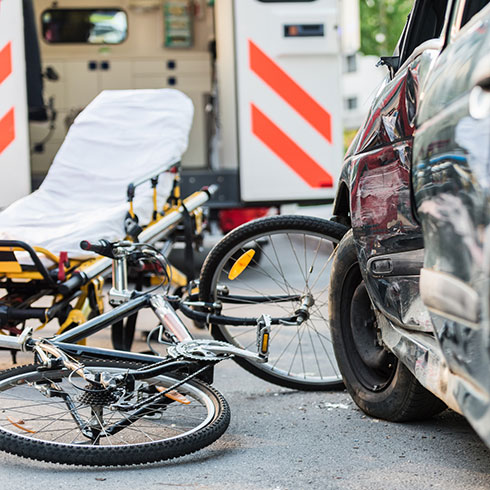
Negligent driving
Negligent driving requires a finding that the driver of a vehicle was not exercising the degree of care that is expected of the ordinary and prudent driver in all the circumstances.
This offence is commonly charged when a person has been involved in a motor vehicle accident, whether that be with another vehicle, an object or obstruction, or a person. It is important to recognise that you do not necessarily have to be involved in an accident in order to be charged with this offence. Any deviation from the road transport legislation may be sufficient to make out this offence.
Your degree of negligence will inform the type of charge you may expect to face.
For example, a common example of this offence occurs where the momentary inattention of the driver causes a collision. If it is found that you have a higher degree of negligence, you may face a more serious charge of dangerous, reckless, or furious driving.
Onus and burden of proof
An offence of negligent driving is considered a strict liability offence. This means that it does not matter whether you intended to commit the crime or not. All that must be established is that you did commit the offence.
It is for the Prosecution to establish, beyond reasonable doubt, that you:
- Drove in a manner negligently. As stated above, negligence is defined as a failure to exercise proper care when driving a motor vehicle
- You were driving the vehicle on a road or road related area
In the event that there was any injury or death occasioned as a result of your driving, the Prosecution must further demonstrate, beyond reasonable doubt, that:
- In relation to any driving which occasions grievous bodily harm, it must be demonstrated that the harm was occasioned because of your driving
- In relation to any driving which occasions death, it must be demonstrated that the death was occasioned because of your driving
Factors taken into account
When assessing whether a driver has driven a vehicle in a manner negligently, section 117(3) of the Road Transport Act 2013 (NSW) (‘Road Transport Act’) requires that the Court take into consideration all the circumstances of the case, including the following –
- The nature, condition and use of the road on which the offence is alleged to have been committed
- The amount of traffic that actually is at the time, or which might reasonably be expected to be, on the road
- Any obstructions or hazards on the road
What are the penalties?
If you plead guilty or are found guilty of an offence of negligent driving, without having caused any injury or death to another person, the maximum penalty which may be imposed is a fine of $1,100.00.
In the event that the collision has resulted in the serious harm or death of another person, the penalties vary.
Negligent driving occasioning
grievous bodily harm
This is an offence which is charged if a driver, through their conduct, causes another person grievous bodily harm.
What is ‘grievous bodily harm’?
Per s 117(4) of the Road Transport Act, “Grievous bodily harm” is an injury which is considered to be serious. It typically involves an injury that is permanent or which causes serious disfigurement of a person.
What are the penalties?
If you plead guilty or are found guilty of an offence of negligent driving occasions grievous bodily harm, the maximum penalty which may be imposed against you is as follows:
-
Imprisonment:
- First offence: 9 months
- Second or subsequent offence: 12 months
-
Monetary penalty:
- First offence: $2,200
- Second or subsequent offence: $3,300
-
Automatic disqualification:
- First offence: 3 years
- Second or subsequent offence: 5 years
-
Minimum disqualification:
- First offence: 12 months
- Second or subsequent offence: 2 years
Negligent driving occasioning death
This offence is charged if a driver, through their conduct in a vehicle, causes the death of another person. This is the most severe form of negligent driving.
What are the penalties?
If you plead guilty or are found guilty of an offence of negligent driving occasioning death, the maximum penalty which may be imposed against you is as follows:
-
Imprisonment:
- First offence: 18 months
- Second or subsequent offence: 2 years
-
Monetary penalty:
- First offence: $3,300 fine
- Second or subsequent offence: $5,500
-
Automatic disqualification:
- First offence: 3 years
- Second or subsequent offence: 5 years
-
Minimum disqualification:
- First offence: 12 months
- Second or subsequent offence: 2 years
Defences
There are several possible defences to a charge of negligent driving. The availability of any defences set out below vary from case to case and are reliant, in part, to the circumstances surrounding the incident. Defences which may be available to you, are listed below:
- Necessity – You must raise, on the balance of probabilities, that their actions were reasonable and justified by the surrounding circumstances.
- Duress – This is a defence whereby the accused person has engaged in the conduct as a result of threats or coercion made against that person.
- Automatism – This is a legal defence available to an accused person where it is established that the actions of the driver were involuntary, and unwilled. Example: A defence of automatism may occur whereby a person suffers from an unexpected medical event like a stroke or a seizure.
What we offer
Strategic Criminal Defence Backed by Experience

Speeding related offences

Driving whilst suspended or disqualified

Dangerous driving

Negligent driving

Hoon offences

Reckless driving offences

Licence appeals and appeals against immediate licence suspensions.
Negligent Driving Frequently Asked Questions
What is the legal definition of "negligent driving" in NSW?
Negligent driving is not explicitly defined in a single sentence within the legislation. Instead, it is a finding that a driver failed to exercise the degree of care and attention expected of an ordinary, prudent driver in the same circumstances. It is judged by an objective community standard rather than the driver’s personal experience or subjective belief that they were doing their best.
How does the Court determine if I was negligent?
In assessing whether a driver has been negligent, the Court is guided by section 117(3) of the Road Transport Act 2013 (NSW). The Magistrate must take into account all surrounding circumstances, including:
- The nature, condition, and use of the road where the incident occurred.
- The amount of traffic that was actually present, or might reasonably be expected to be present, at that time.
- Any obstructions or hazards on the road, such as broken-down vehicles or debris.
What are the different levels of negligent driving charges?
The seriousness of a negligent driving charge depends entirely on the outcome of the incident:
- Negligent Driving (Standard): Usually charged after minor collisions where no one is seriously injured. This is often dealt with via a traffic infringement notice but can result in a fine of up to $1,100 if heard in court.
- Negligent Driving Occasioning Grievous Bodily Harm (GBH): A serious criminal offence where the negligence caused another person to suffer severe or permanent injuries, such as broken bones or permanent disfigurement.
- Negligent Driving Occasioning Death: The most severe level, charged when the driving conduct results in the loss of a human life.
What penalties can I expect if convicted?
Penalties vary significantly based on the severity of the harm caused and whether you have prior major offences:
- For GBH: For a first offence, you face a maximum penalty of 9 months imprisonment and a $2,200 fine. A second or subsequent offence increases this to 12 months imprisonment and a $3,300 fine.
- For Death: A first-time offender faces up to 18 months in gaol and a $3,300 fine. For repeat offenders, the maximum penalty is 2 years imprisonment and a $5,500 fine.
Will I lose my licence?
If convicted of negligent driving occasioning death or GBH, a licence disqualification is mandatory:
- First Offence: The "automatic" disqualification is 3 years, though the Court has the discretion to reduce this to a "minimum" of 12 months.
- Second or Subsequent Offence: The automatic disqualification is 5 years, with a court-ordered minimum of 2 years.
Can I defend a negligent driving charge?
Yes, several legal and factual defences may be available depending on your specific circumstances:
- Lack of Negligence: Arguing that your driving met the standard of a prudent driver and the accident was caused by factors beyond your control.
- Causation: Challenging whether your driving was the actual cause of the injury or death.
- Necessity/Duress: Arguing you were forced to drive in that manner to avoid immediate, greater harm.
- Automatism: Proving the driving was involuntary, such as due to a sudden, undiagnosed medical episode like a seizure.
- Mechanical Defect: Showing that a sudden, unforeseeable vehicle failure caused the incident.
Why is it important to seek early legal advice?
Negligent driving is not just a simple traffic matter; when injury or death is involved, it is a serious criminal charge with long-term consequences for your freedom and reputation. An experienced lawyer can thoroughly investigate the evidence—such as dashcam footage or witness statements—to build a robust defence, negotiate with the Police, or argue for a non-conviction under Section 10.
DON'T RISK YOUR LICENCE OR YOUR
LIVELIHOOD.
We take a practical, results driven approach. Helping you understand your options,
preparing a compelling case, and representing you in court.
Contact us today for expert traffic law advice.

Contact us!
Fair Fees. Flexible Options.
Real Support.
Expert Legal Services Across All NSW Courts.
Get in touch today to discuss how we can help, on your terms.